Project
Uwaco SVIS (Smart Vehicle Information System)
cat ~/projects/uwaco_svis_(smart_vehicle_information_system).md
Last updated:
Uwaco SVIS (Smart Vehicle Information System)
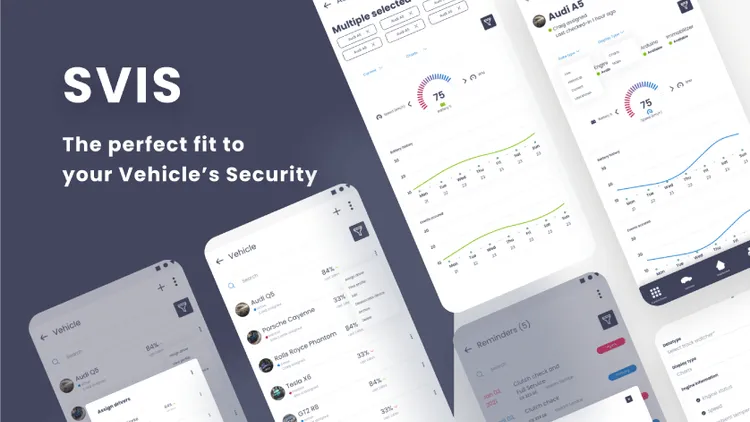
SVIS helps vehicle owners and fleet operators monitor and control their vehicles in real time — location, speed, fuel level, battery voltage, engine oil temperature, ambient temperature, RPM, diagnostic trouble codes and more — and send remote commands such as lock/unlock or toggling lights. It is delivered as a responsive web application alongside native Android phone, Android tablet, and iPhone apps, all sharing a single backend over MQTT.
The product is an industrial-grade automotive platform built for productivity, sustainability and transformation. It gives a single workspace to onboard users, manage vehicles, draw and reuse geographic regions, define automated reactions to vehicle telemetry, and replay historical trips.
I was the lead developer on this project and owned the design, development, and deployment of the platform end to end. The web application is built with Angular; the mobile applications are built with Flutter. The backend runs on Node.js, Express and Parse Server, with MQTT for device telemetry and MongoDB for persistence. CI/CD runs on Jenkins and the platform is containerised and deployed to a virtual cloud.
- Project Status: Active
- Product Page: Uwaco SVIS
- App: Google Play Store
Features
- Guided onboarding — a multi-step walkthrough that introduces the dashboard, vehicles, regions and track actions the first time a user signs in.
- Vehicle management — add, edit, archive and unarchive vehicles with VIN, make, model, year, fuel type, transmission, body style, registration documents, bearer and license information. Vehicles can be assigned to users and associated with a physical tracker device.
- Regions management — draw circular, rectangular or polygonal regions directly on the map, search existing places, save named regions and reuse them across vehicles and alerts.
- Track Watchers and Track Actions — bind telemetry thresholds (geocoordinates, speed, fuel level, ambient temperature, etc.) to one or more reactions: SMS, Email, Push Notification, Silent Call, or Voice Playback with Text-to-Speech or a pre-recorded audio file. Reusable templates let operators roll out a consistent policy across a fleet.
- Live tracking — real-time gauges and charts for battery voltage, speed, RPM, ambient temperature, engine oil temperature and fuel level, with a switchable map-and-table view.
- Historical tracking — replay past trips and telemetry over a selectable date range.
- Remote commands — lock/unlock, toggle lights and other commands sent to the vehicle over MQTT.
- Cross-device UX — fully responsive web client plus dedicated Android phone, Android tablet and iPhone layouts.
- Workspaces, authentication and password recovery — sign-up, login, forgot password and password reset flows across web, mobile and tablet.
Technologies
- Frontend: Flutter, Angular, TypeScript, SCSS
- Backend: Node.js, Parse Server, Express, MongoDB, MQTT, Spring Boot
- CI/CD: Jenkins, Docker, Kubernetes
- Monitoring: ELK Stack


